
36 Battersea Square
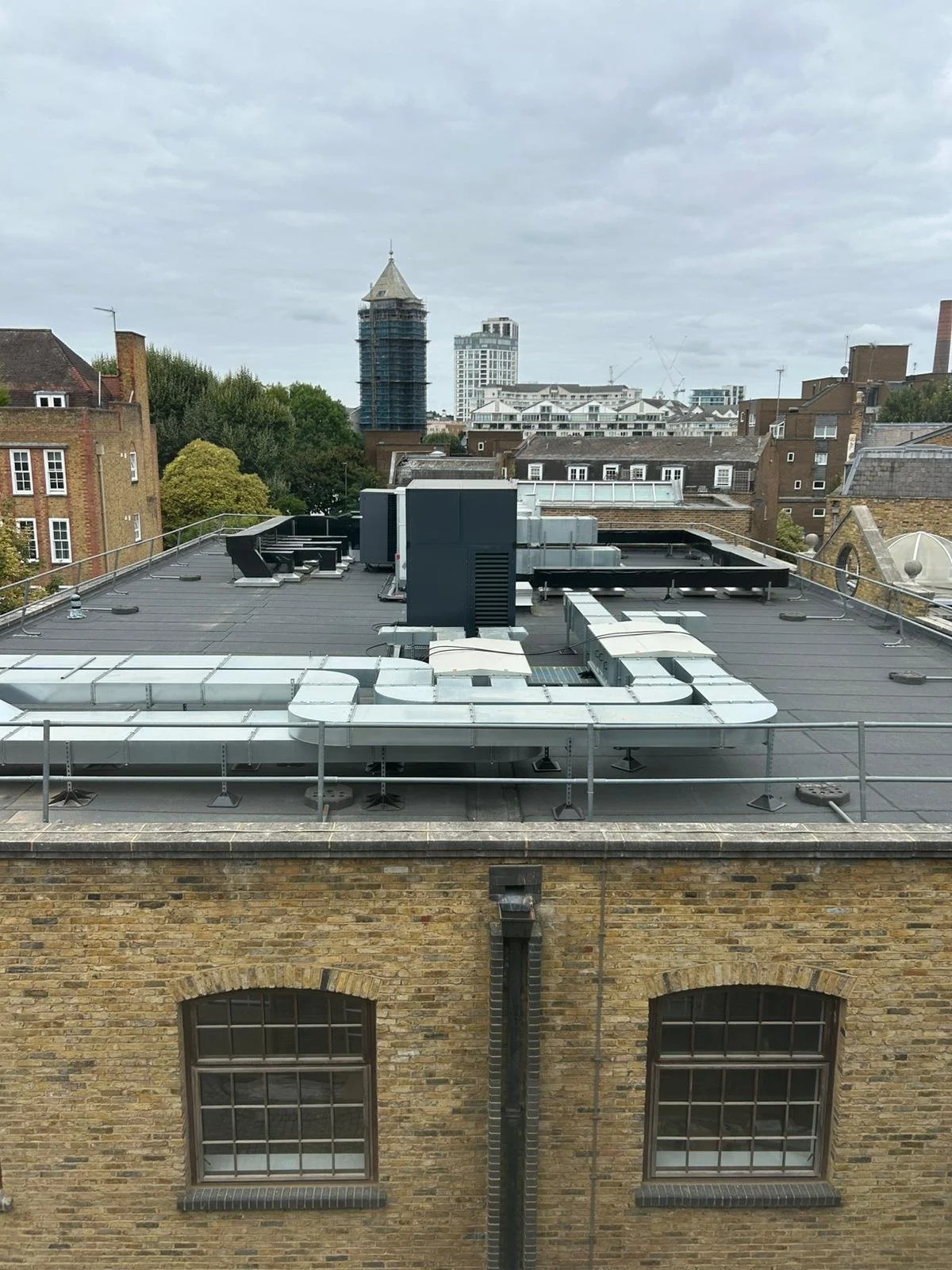
36 Battersea Square, commonly known as Ship House, is located in the historic heart of the old Battersea village. Today, it forms part of the Battersea Square Conservation Area, which has evolved over the centuries from a Saxon settlement into an industrial granary hub, and ultimately into a modern cultural and creative space.
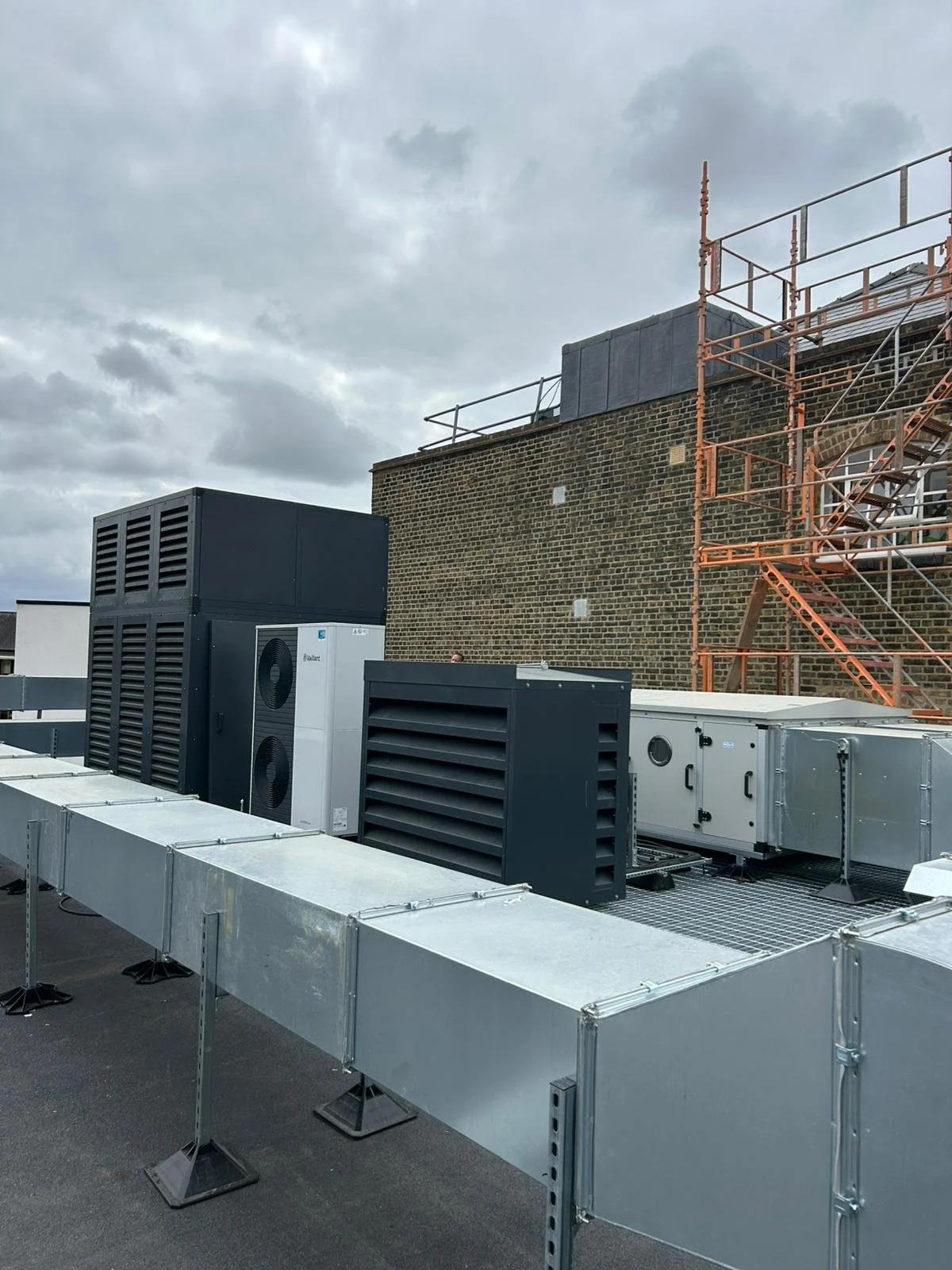
Due to the building's location within a conservation area, surrounded by residential properties and adjacent to a school, the planning and noise constraints on this project were particularly demanding. The main building was constructed in the 1890s and was never designed to accommodate modern mechanical services. As a result, almost all of the air handling units (AHUs), together with the associated heat pumps, had to be located on the roof.
The key project requirements included:
The AHUs had to be as low-profile and as quiet as possible to satisfy strict planning and acoustic requirements, while also contributing towards a BREEAM Excellent rating. All Eco-Airvent VHR units achieved a Specific Fan Power (SFP) of 0.9 W/l/s.
The condensing units and heat pumps also required acoustic enclosures to ensure compliance with the project's stringent noise limits.
Using Eco-Airvent's patented VHR range of low-profile, ultra-quiet MVHR units, we were able to meet and exceed the project's planning and acoustic requirements. Each MVHR unit was supplied complete with an integral Big Foot support system, allowing the units to be craned directly into position on the flat roof, reducing installation time and complexity. Every unit was also supplied with Eco-Airvent's matched attenuators, providing enhanced noise attenuation for both the occupied spaces and external air discharge.
The associated air source heat pumps and VRF condensing units also had to comply with the strict acoustic criteria specified for the development. Eco-Airvent supplied and installed a range of bespoke acoustic enclosures for both the air source heat pumps and the VRF vertical discharge units. These enclosures were carefully designed to maximise free airflow while remaining fully compliant with the equipment manufacturers' operating recommendations, ensuring optimum system performance without compromising noise control.